
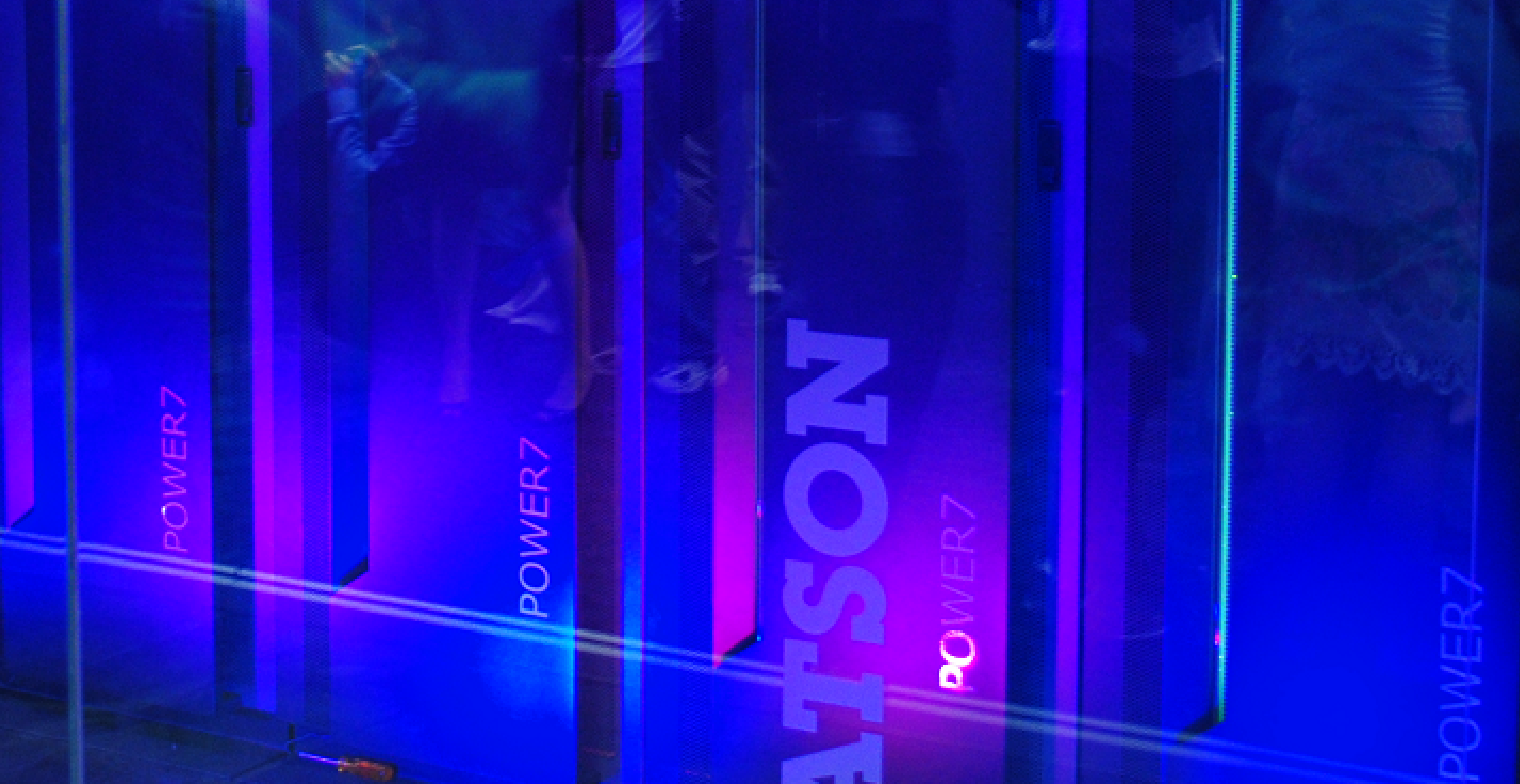
IBM breaking the mould with B2B marketing.
B2B companies are often perceived as faceless, brands that rely on the reputation of their product or service combined with some hardcore relationship building to seal their deals, but IBM has broken the mould and busted this assumption wide open with their B2B online marketing strategies.
B2B companies are often perceived as faceless, brands that rely on the reputation of their product or service combined with some hardcore relationship building to seal deals. But IBM has broken the mould with online marketing strategies, taking ‘the persuading sales rep with his caddy on the golf course trying to sell the next best thing’ out of the equation, and turning to online marketing for sales.
Like any other B2B business, building partnerships is key, and IBM has made ‘build bonds’ their guiding ethos. The partnerships they choose to foster are not made to merely sell their existing products, but the positioning makes strategic alliances with industries and technologies, connecting it with their own. This allows IBM to offer their clients the support and deep expertise that they need to extend and deepen their own service to their target consumer groups, including resellers, retail stores, distributors, government organisations, and the likes.
IBM has devised a great strategy to foster relationships with stakeholders internally and externally. The successful planned messaging in their visual and verbal identity, advertising and the products they develop allows them to have a coherent positioning that runs throughout. This has led to wonderful unplanned messaging with amazing revenue gains as a result.
Taking a closer look at their planned messaging, the contact points the brand uses to build trust, aside from the user’s experiences with their products and services, would be social media platforms. IBM has a solid presence on Twitter with several different accounts for different types of consumers. Some are purposed for new product launches, software updates and studies, while other accounts are purposed to communicate upcoming events, sharing news with developers and promoting news releases. But IBM didn’t only decide to create a few pages for themselves on Twitter, they went a step further and announced a partnership to ‘build bonds’ with Twitter with the aim to help companies maximise their engagement with followers through the integration of cloud analytics services – increasing customer reach, as well as further development of solutions for specific business needs. They also committed to train 10,000 dedicated global consultants to service the Twitter platform, how is that for broadcasting the brand’s value proposition and building consumer trust? Aside from Twitter they also have a presence on Facebook, mainly to communicate general news and info on IBM. And then of course Instagram where they get to present their products and corporate culture with some beautiful photography and messaging.
Each social media account has dedicated staff that manages it and all are required to adhere to a strict social computing guideline that has been created especially for IBM’s social sharing.
Another contact point where customers are introduced to IBM’s value proposition and have the opportunity to engage emotionally with the brand would be through marketing campaigns. IBM uses these very unorthodox methods for B2B to initiate a response from potential new buyers by humanising the brand so that people can relate to it; something one would normally only expect from consumer facing brands. The first marketing campaign that comes to mind is Watson artificial intelligence.
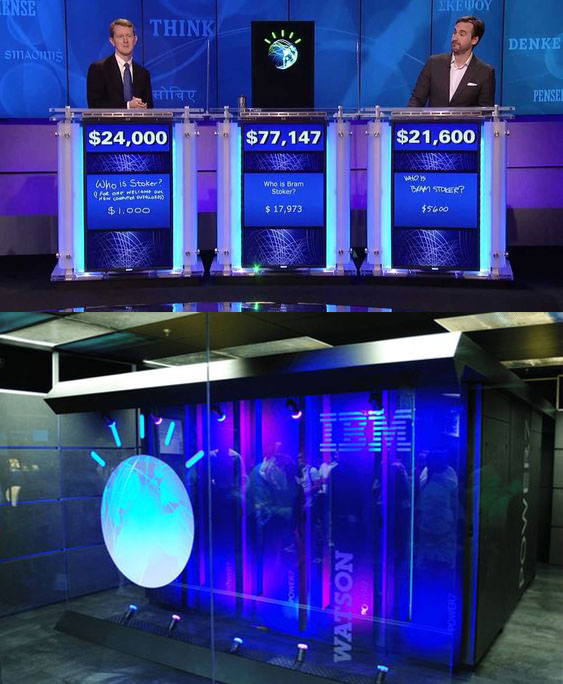
Watson artificial intelligence campaign.
Watson AI came into public view after playing in, and winning a public game show by calculating answers to questions at a speed that the earlier winners couldn’t match. In doing so Watson was turned into a celebrity of sorts, being able to for instance give medical advice to nurses, recommending drugs for medical symptoms so accurately that 90% of nurses using Watson deem it as believable advice. As a consequence, Watson has become well used in the health care industry. It now is also applied in various other B2B applications in other industries.
IBM also has an ongoing campaign called ‘smarter planet’ which is a technology focused campaign hosting Ted-type talks and communications that are entirely controlled by IBM and aimed at the B2B community. These include speeches, interviews, discussions etc. that is specifically tailored to different industries that will be able to use IBM technologies with the hopes that the information shared will convert to sales. High quality content with positive feedback and results is shared and this has converted into some of IBM’s most rewarding revenue years.
And then there is IBM’s ‘the cognitive era’ campaigns.
‘The cognitive era’ – A set of campaigns that introduces Watson in day-to-day business operations next to ordinary people to personalise the technology.
I am happy to say that just as IBM was the founder of some of the major inventions of our times such as ATM’s, the floppy disk, the Magnetic stripe-card and very recently Watson artificial intelligence to only mention a few, they are still paving the way with innovation.
Now not only with their products and services, but also in the way they build relationships with their consumers in the B2B arena, with online marketing in the social space.
Sources.